

If you want to know what is buzzing in Stokkoya, just head to the late-morning chatter at Coop at 11AM. The back room is where people drop by, making it the perfect spot to listen in. This is where our project started. Conversations jump from electricity prices to ferry connections before the bridges were built.

Two paths run in parallel at the beginning of the creative process. One is gathering and processing local information, the other is weaving the participating artists’ methods into a single organism, where everyone trusts each other and each artist’ practice expands through collaboration.

Whenever there was a party on one island, people would row across the water to take part, and when the festivities shifted to the other side, the boats would once again glide back and forth. These gatherings brought everyone together – age and generation made no difference. In 1958, the first ferry was introduced, linking the two islands with the mainland. Today there are bridges between the islands and the main land. These stories stuck with us and we began thinking about the time and the pace before the bridges were built.


Thoughts of coexistence led us to an interest in knock-on effects, impacts, chains, sequences, signals and receivers - how stuff gets around.
With dark winters and bright summers, local routines and livelihoods are directly shaped by light, its effect is binding; a force felt by everyone here. We felt our link to the larger universe when we climbed the mountain and sat in silence watching the lunar eclipse, and we felt humbled by the vastness of the world when we watched the northern lights at night.

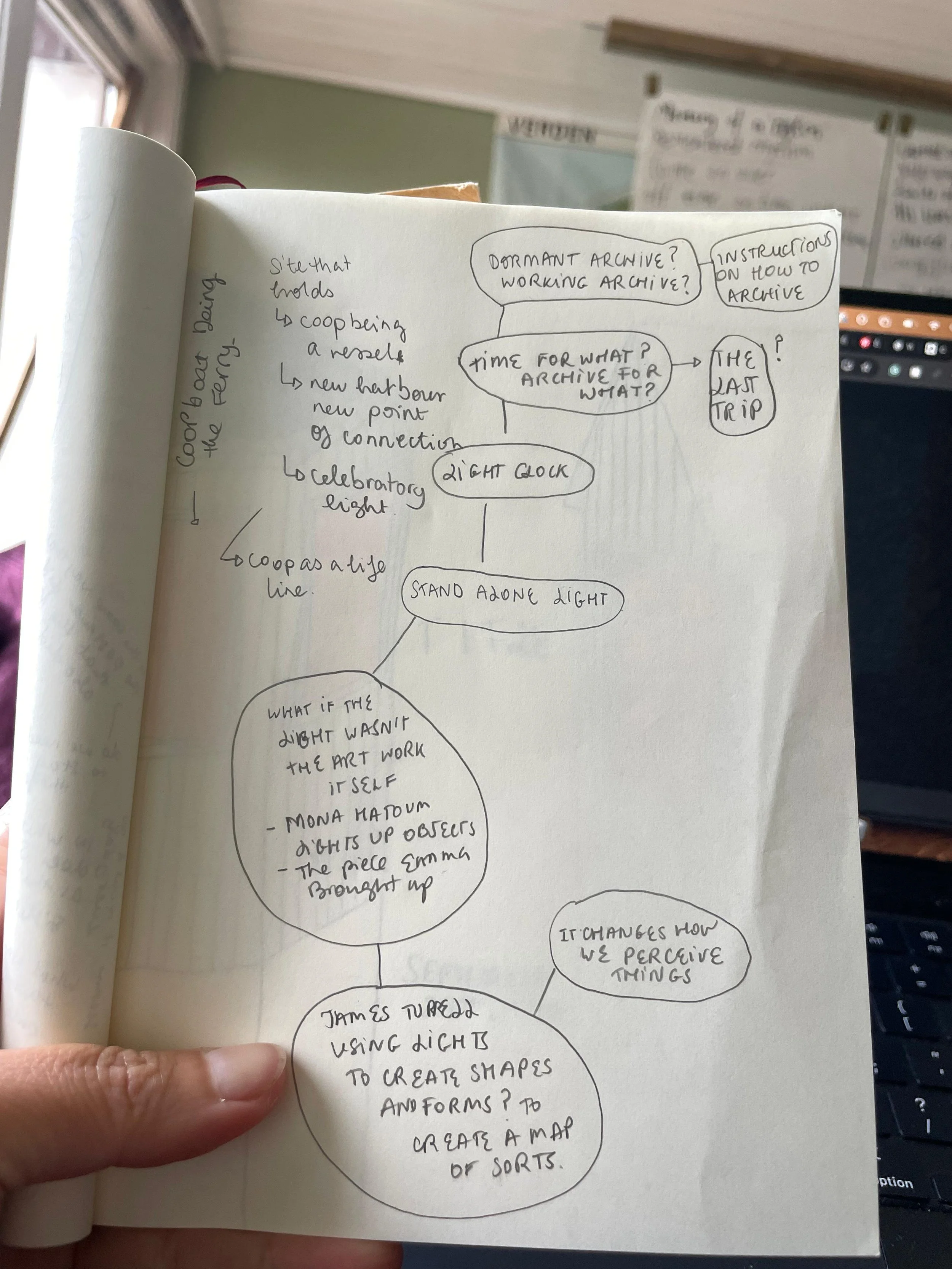
One of the most critical phases is when all the ideas must transform, weave together, and find their way into a coherent and feasible concept. This is often a period of fragility, crisis, and frustration. People alternate between fear, confidence, and stress. It resembles the creative process of any artist: the moment in which one begins to doubt whether the idea can sustain itself.
Whereas an artist must rely solely on an internal dialogue, a collaborative has the great advantage of externalising its voices. Insecurities can flow into a shared space when the group goes for walks, cooks, gathers mushrooms, or goes for a swim. Fears are spoken aloud rather than remaining lodged in the body; they are carried collectively instead of individually.

When the group functions well, members hold one another through the crisis. This is crucial to the quality of the work, as the group gains the strength to preserve its willingness to take risks and to remain ambitious and uncompromising together. However, if the collaboration is not consciously maintained, the group risks collapsing at this point — precisely because the pressure is at its highest.
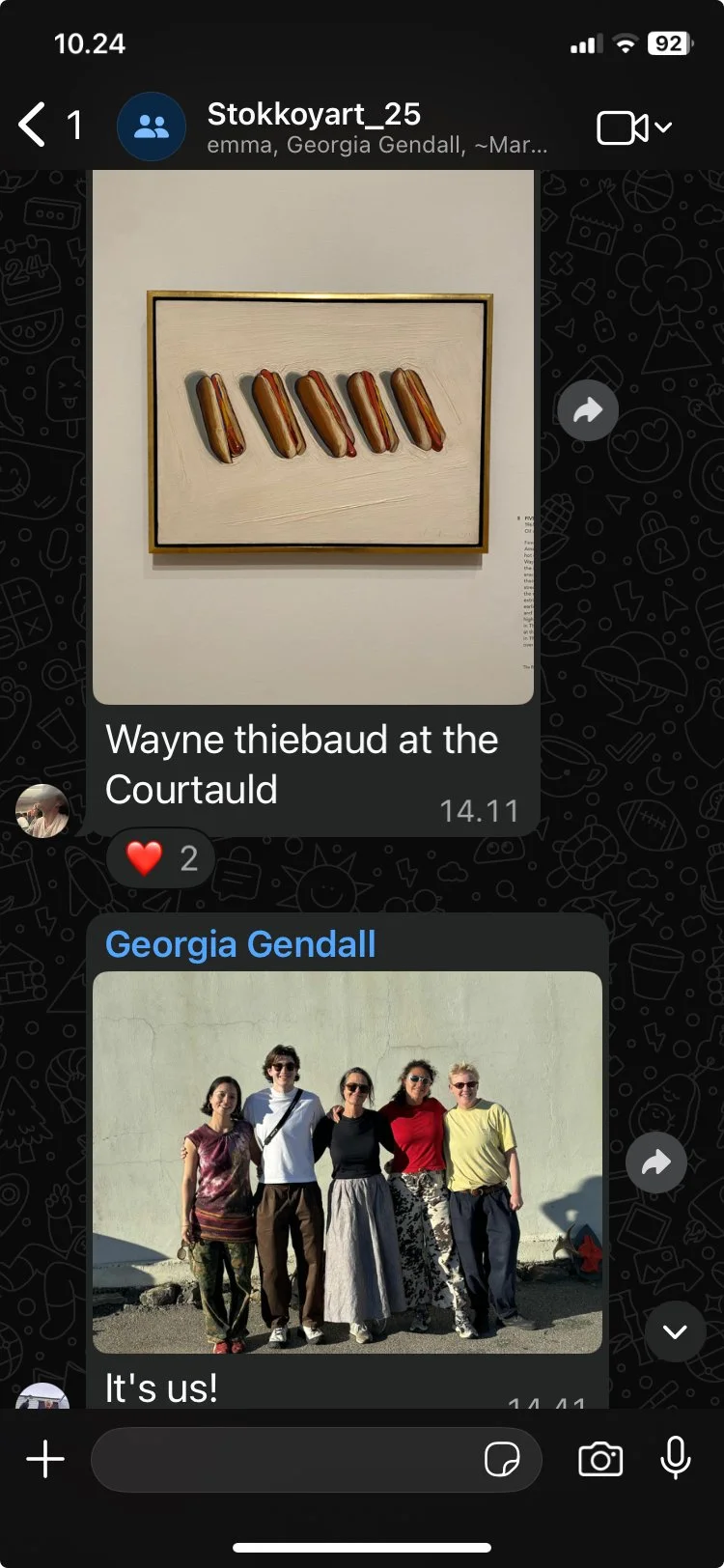
Because of the intensity of the month-long collaboration, you will build strong relationships and leave with trusted peers you know well and can rely on for support